
AC settings to reduce electricity bill can make a big difference in how efficiently you use your air conditioner. If your AC electricity bill is too high, changing a few simple settings and daily usage habits can help reduce unnecessary power consumption.. Using an air conditioner during summer can make your home comfortable, but it can also increase your electricity bill.
Many people think that buying a high-star or inverter AC is enough to save electricity. However, how you use your AC also matters.
Small things like setting the temperature too low, using the wrong mode, keeping the AC filter dirty, or leaving doors and windows open can affect cooling performance and energy use.
In this guide, we will explain 7 simple AC settings and usage tips that can help you reduce unnecessary electricity consumption.
You don’t need to be an AC expert to understand them.
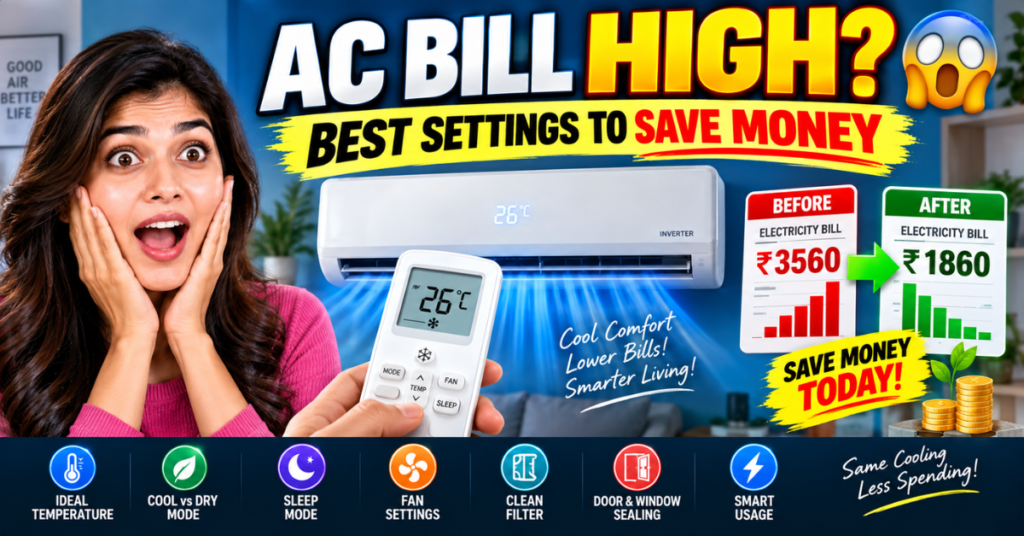
1. Don't Set Your AC to 16°C Just for Faster Cooling
This is one of the most common AC mistakes.
Many people set the AC to 16°C because they believe the room will cool much faster.
But setting a lower temperature does not mean the AC will instantly cool the room to that temperature.
For example, if your room is hot and you set the AC to 16°C, the AC still has to remove heat from the room. A lower temperature setting mainly means you are asking the AC to continue cooling until it reaches a much lower target.
What temperature should you use?
For normal comfort, you can try around 24°C to 26°C and adjust it according to your comfort.
You don’t need to make the room extremely cold.
Simple tip: Start around 24°C-26°C and see what feels comfortable for you.
2. Understand Cool Mode vs Dry Mode
Your AC remote may have several modes, but Cool Mode and Dry Mode are two of the most commonly misunderstood.
Cool Mode
Cool Mode is designed for cooling the room.
If the room is hot and you want to lower the temperature, this is normally the mode you will use.
Dry Mode
Dry Mode is mainly designed to reduce humidity.
It can be useful during humid weather, especially during the monsoon when the air can feel sticky even when the temperature is not extremely high.
However, you should not assume that Dry Mode will always use less electricity than Cool Mode.
The actual power consumption depends on your AC, room conditions, humidity, temperature and how long the AC runs.
Easy rule
Hot room = Cool Mode
Very humid room = Dry Mode can be useful
3. Use Sleep Mode at Night
If your AC has Sleep Mode, it can be useful while sleeping.
During the night, your cooling requirement may change. Many AC models are designed to adjust their operation or temperature gradually when Sleep Mode is activated.
This can help avoid unnecessary aggressive cooling throughout the night.
However, Sleep Mode is not identical on every AC.
Different brands and models can have different Sleep Mode functions, so check your AC manual to understand exactly what your model does.
Tip
If you are comfortable at a slightly warmer temperature while sleeping, Sleep Mode can be a convenient option.
motorola pad 60 neo – full review
4. Don't Always Run the Fan at Maximum Speed
Your AC remote usually gives you different fan-speed options such as:
- Low
- Medium
- High
- Auto
Many people simply use High Fan all the time.
But maximum fan speed is not always necessary.
Try Auto Fan
Auto Fan allows the AC to adjust airflow based on its operation.
For everyday use, Auto Fan can be a simple and convenient choice.
If the room is very hot when you first turn on the AC, you may prefer stronger airflow. Once the room becomes comfortable, you may not need maximum fan speed.
5. Clean Your AC Filter Regularly
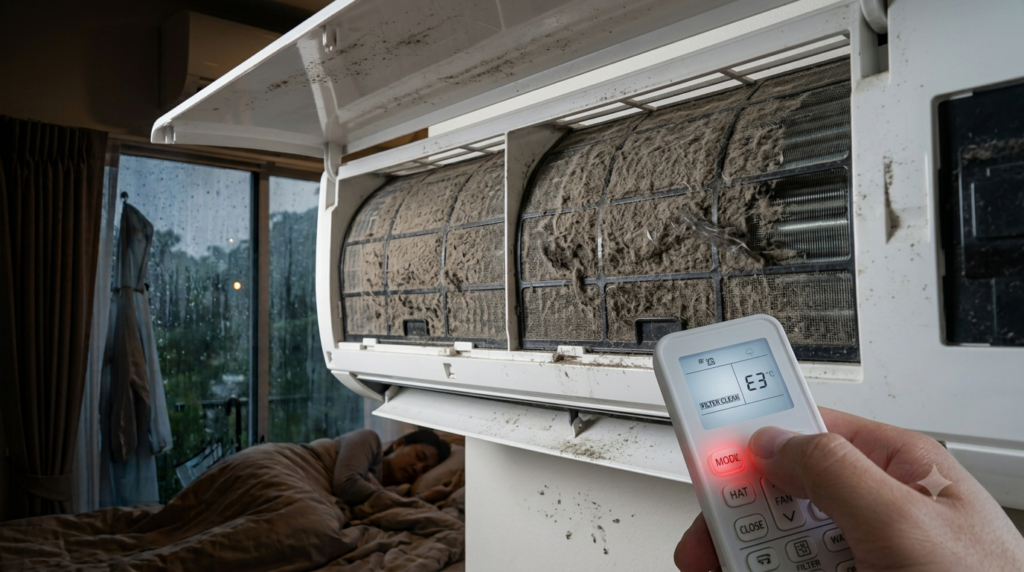
This is one of the most important AC maintenance tips.
The indoor AC unit has an air filter that collects dust and particles.
When the filter becomes heavily dirty, airflow can be restricted. Poor airflow can affect cooling performance and may make the AC work harder to maintain comfort.
This doesn’t mean a dirty filter will always increase your electricity bill by a fixed percentage. The impact depends on the AC, filter condition and usage.
What should you do?
Check your AC filter regularly and clean it according to the manufacturer’s instructions.
If your room has a lot of dust or you use the AC frequently, you may need to check it more often.
Clean filter = better airflow + better cooling performance.
6. Keep Doors and Windows Properly Closed
You can have the best AC in the world, but if cool air is constantly escaping, the AC will have to work harder to maintain the desired temperature.
For example:
- Open windows
- Frequently opened doors
- Gaps around doors or windows
- Poor sealing
can allow outside air to enter while cooled air escapes.
Simple solution
When the AC is running:
Close the doors and windows properly.
Also check for obvious gaps or air leakage around doors and windows.
This simple habit can make a noticeable difference to how effectively your AC cools the room.
7. Choose a Comfortable Temperature Instead of the Lowest Temperature
The final and most important tip is simple:
Don’t make your AC colder than necessary.
If you are comfortable at 25°C or 26°C, there may be little reason to set the AC to 18°C or 16°C.
A moderate temperature can help you balance comfort and electricity consumption.
However, remember that AC electricity consumption does not depend on temperature setting alone.
It can also be affected by:
- Room size
- AC capacity
- Outdoor temperature
- Humidity
- Sunlight entering the room
- Insulation
- Number of people in the room
- How many hours the AC runs
- AC efficiency
- Maintenance condition
So don’t expect one temperature setting to produce the same electricity savings in every home.
Does 26°C Really Save More Electricity Than 16°C?
In general, a higher indoor temperature target requires less cooling than a much lower target, so using a reasonable temperature can help reduce cooling demand.
But there is no single guaranteed saving percentage for every household.
For example, an AC running in a small, well-insulated room at 26°C can behave very differently from the same AC running in a large room with direct sunlight and poor insulation.
That’s why it’s better to think about efficient AC usage rather than one magic temperature.

Best AC Settings for Electricity Saving
Here is a simple starting point:
Remember that the best settings can vary between different AC brands and models.
| AC Setting | Recommended Approach |
|---|---|
| Temperature | Try 24°C-26°C |
| Mode | Cool for normal cooling |
| Dry Mode | Useful in humid conditions |
| Fan Speed | Auto for everyday use |
| Sleep Mode | Useful during nighttime |
| Air Filter | Keep it clean |
| Doors & Windows | Keep properly closed |
Inverter AC vs Non-Inverter AC: Does It Matter?
Yes, the type of AC also matters.
An inverter AC can vary compressor speed according to the cooling requirement instead of simply operating at one fixed compressor speed.
This can make inverter ACs more efficient in many usage conditions, especially when they are allowed to run and maintain a stable room temperature.
But an inverter AC is not automatically cheap to operate in every situation.
Poor installation, dirty filters, extreme outdoor temperatures, poor insulation and excessive usage can still increase electricity consumption.
5 Bonus Tips to Reduce Your AC Electricity Bill
Apart from changing remote settings, try these simple habits.
1. Keep the AC filter clean
Good airflow helps the AC operate properly.
2. Keep sunlight out
Use curtains or blinds if direct sunlight is heating the room.
3. Don’t keep opening the door
Every time the door opens, warm air can enter the room.
4. Maintain the AC properly
Get professional servicing when required and follow the manufacturer’s maintenance recommendations.
5. Don’t cool an empty room
If nobody is using the room for a long period, there is usually no reason to keep the AC running.
Conclusion:
You don’t need to completely stop using your AC to control your electricity bill.
Instead, focus on using your AC intelligently.
Start with a comfortable temperature such as 24°C-26°C, use the appropriate mode, try Sleep Mode at night, use Auto Fan when suitable, keep the air filter clean and make sure doors and windows are properly closed.
Most importantly, don’t believe every AC electricity-saving trick you see online. Your actual electricity consumption depends on many factors, including your AC model, room conditions, outdoor temperature and number of operating hours.
Smart AC usage is not about making the room freezing cold. It’s about getting comfortable cooling without wasting energy.
FAQ
What is the best AC temperature to save electricity?
For many people, 24°C-26°C can be a comfortable starting range. The best temperature depends on your personal comfort and room conditions.
Does setting AC to 16°C cool the room faster?
Not necessarily. A lower temperature setting does not mean the AC can instantly cool the room faster. It mainly gives the AC a lower target temperature to reach.
Is Dry Mode better than Cool Mode?
Not always. Dry Mode is mainly useful for reducing humidity, while Cool Mode is designed for normal room cooling.
Is Sleep Mode good for saving electricity?
Sleep Mode can help reduce unnecessary cooling during the night on many AC models, but its exact operation varies by brand and model.
Does a dirty AC filter increase electricity consumption?
A heavily dirty filter can restrict airflow and reduce cooling performance. Regular filter cleaning is therefore important for efficient AC operation.
Is 26°C good for AC?
For many users, 26°C can provide a good balance between comfort and cooling demand. However, choose the temperature that is comfortable for you.