
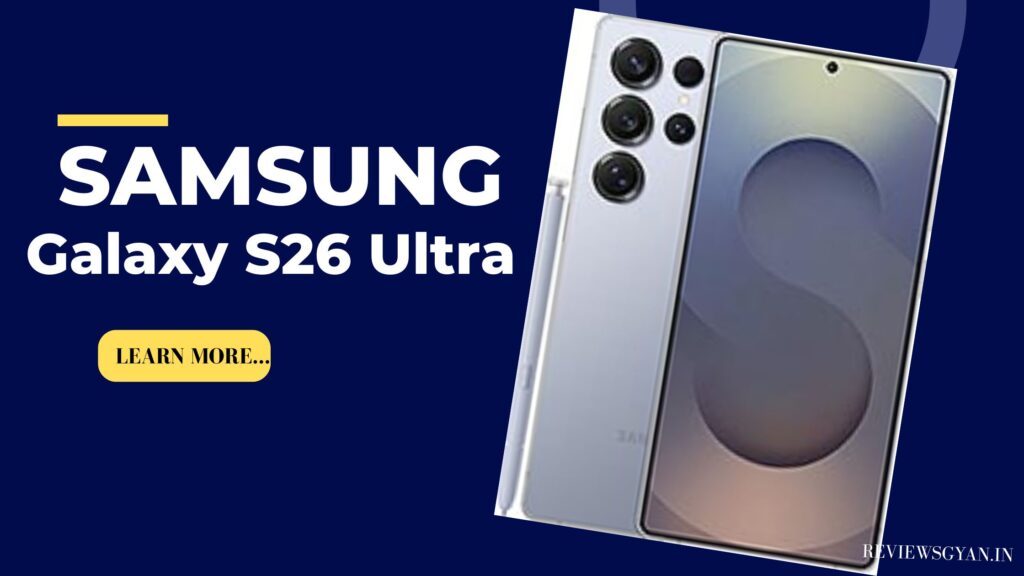
Samsung Galaxy S26 Ultra: Big Specs on Paper, Big Questions in Reality
In Samsung Galaxy s26 ultra reviews- Every year, Samsung’s Ultra series arrives with massive expectations. Leaks and rumors around the Galaxy S26 Ultra suggest another powerhouse on paper. A stunning display, top-tier camera hardware, and the latest Snapdragon chipset all sound impressive. But once you look past the spec sheet, a lot of users are starting to ask a simple question: is Samsung really upgrading what matters, or just making the phone thinner again?
Let’s break this down in a practical, no-hype way.
Design: Thinner Body, Familiar Trade-offs
According to leaks, the Galaxy S26 Ultra may come with a slim 7.9 mm chassis and a weight of around 214 grams. The build still looks premium with Gorilla Armor 2 on the front, Gorilla Glass Victus 2 on the back, and a grade 5 titanium frame. It is solid, no doubt.
But here is the real issue. Whenever phone brands chase thinness, something always gets sacrificed. Most of the time, it is battery endurance and audio quality. We have already seen this trend with recent foldables and flagship phones. Brands rarely mention these compromises during launch events. Instead, the focus stays on how thin and light the phone feels in hand.
Thin phones look great on stage. In daily use, long battery life matters more.
Display: Excellent, But Not a Big Leap
The rumored 6.9-inch Dynamic LTPO AMOLED 2X display looks fantastic on paper. You get a 120Hz refresh rate, HDR10+ support, and a claimed peak brightness of 2600 nits. Resolution stays sharp at 1440 x 3120 pixels with nearly 500 ppi density.
That said, this is not a breakthrough. Samsung has been delivering excellent displays for years. There is no major jump in brightness, size, or real-world usability compared to recent Ultra models. If you already own an S24 Ultra or even an S23 Ultra, the screen alone is unlikely to feel new.
Performance: Powerful, As Expected
The Snapdragon 8 Elite Gen 5 chipset built on a 3 nm process sounds extremely powerful. With new Oryon V3 cores and the Adreno 840 GPU, performance should be top-tier. Gaming, multitasking, AI features, and long-term updates should all run smoothly.
Samsung is also promising Android 16 out of the box with up to seven major Android upgrades. This is one area where Samsung truly deserves credit. Long software support adds real value, especially for users who keep their phones for years.
Still, raw power is not something Ultra buyers have been lacking in recent generations.
Storage and RAM: The Same Story Again
This is where many long-time Samsung users feel disappointed. The base variant is once again rumored to be 12GB RAM with 256GB storage. Samsung has been doing this since the Note 20 Ultra era.
Six generations later, there is still no meaningful upgrade in base storage or memory. Yes, higher variants go up to 1TB and 16GB RAM, but those come at a steep price. For a phone positioned as “Ultra,” the base model feels stuck in the past.
For power users, this feels less like refinement and more like cost-cutting.
Cameras: Reliable, Not Revolutionary
The quad-camera setup looks familiar. A 200MP main sensor, a 3x telephoto, a 5x periscope lens, and a 50MP ultra-wide camera cover almost every shooting scenario. Video support up to 8K and advanced HDR features sound impressive.
Samsung cameras are consistent and versatile, but innovation feels slow. The hardware upgrades are incremental rather than exciting. Most improvements are likely to come from software processing rather than new sensors.
For casual users, the camera will be excellent. For enthusiasts expecting something radically better, it may feel underwhelming.
Battery and Charging: Playing It Safe
The rumored 5000 mAh battery remains unchanged. Charging speeds reach up to 60W wired, with 15W wireless and reverse wireless charging.
Here is the concern. With a thinner body and a powerful chipset, battery life could take a hit. Samsung rarely talks openly about this. Bigger batteries or efficiency-focused upgrades would have been more reassuring than shaving off a few millimeters of thickness.
Missing Features: Small Things That Matter
One feature many users still miss is the IR blaster. It may sound old-school, but it was genuinely useful. Controlling TVs, ACs, and other appliances directly from your phone was convenient. Removing such features in the name of design minimalism feels unnecessary.
Sometimes, progress means keeping what already works.
Final Thoughts: Is Thinner Really Better?
The Galaxy S26 Ultra looks like a premium, powerful smartphone. There is no doubt about that. But when you look closely, the upgrades feel safe and repetitive. No bigger battery. No meaningful base storage upgrade. No major display leap. The main talking point once again seems to be thinness.
For new buyers, this phone will feel amazing. For long-time Samsung Ultra users, it may feel like a sideways move rather than a real step forward.
Samsung knows how to build great phones. The question is whether they are listening closely enough to what users actually want, not just what looks good in presentations.