
If you are looking for the best 1.5 ton 5 star AC in India 2026, electricity consumption should be one of your biggest considerations. A cheaper AC can cost more over the years if its efficiency is poor, especially if you use it for 6–10 hours every day. We compared five popular inverter split ACs from LG, Blue Star, Lloyd, IFB and Panasonic based on their rated annual energy consumption, ISEER, cooling capacity, features, warranty and approximate price.
Among these five models, the IFB 1.5 Ton 5 Star AC stands out for the lowest listed annual energy consumption at 644.41 units, while the Panasonic offers the highest ISEER at 5.80. LG is also impressive with a 5.77 ISEER rating, although its listed capacity is 1.42 ton rather than a full 1.5 ton.
If your priority is saving electricity, IFB deserves serious consideration. If you want a more premium feature set, Panasonic is another excellent option.
Check out the best price & more details…

Quick Comparison: Best 1.5 Ton 5 Star ACs in India 2026
| AC | Capacity | ISEER | Annual Energy Consumption | Approx. Price | Best For |
|---|
| IFB CI195SS32SGM3 | 1.5 Ton | 5.65 | 644.41 units | ₹42,490 | Lowest rated electricity use |
| LG AS-Q19YNZE2 | 1.42 Ton | 5.77 | 671.15 units | ₹46,990 | LG reliability & efficiency |
| Panasonic CS/CU-NU18BKY5WX | 1.5 Ton | 5.80 | 681.01 units | ₹47,990 | Premium features |
| Blue Star IA518ZXUS | 1.5 Ton | 5.63 | 701.68 units | ₹47,490 | Smart cooling & sensors |
| Lloyd GLS18I5KWGGW | 1.5 Ton | 5.20 | 715.07 units* | ₹38,490 | Budget buyers |
*The Lloyd figure supplied is based on the older BEE rating information and should be checked against the current 2026 product energy label before purchase.
Which one uses the least electricity?
Based on the annual consumption figures supplied:
IFB: 644.41 units/year → lowest
LG: 671.15 units/year
Panasonic: 681.01 units/year
Blue Star: 701.68 units/year
Lloyd: 715.07 units/year*
However, don’t assume your actual electricity bill will exactly match these figures. BEE annual consumption is a standardized comparison figure. Actual consumption depends on room size, outside temperature, thermostat setting, insulation, usage hours, maintenance and other factors.
1. IFB 1.5 Ton 5 Star AI Inverter Split AC
If electricity savings are your number-one priority, the IFB CI195SS32SGM3 is arguably the most interesting model in this comparison. Its listed annual energy consumption of 644.41 units is the lowest among the five ACs discussed here.
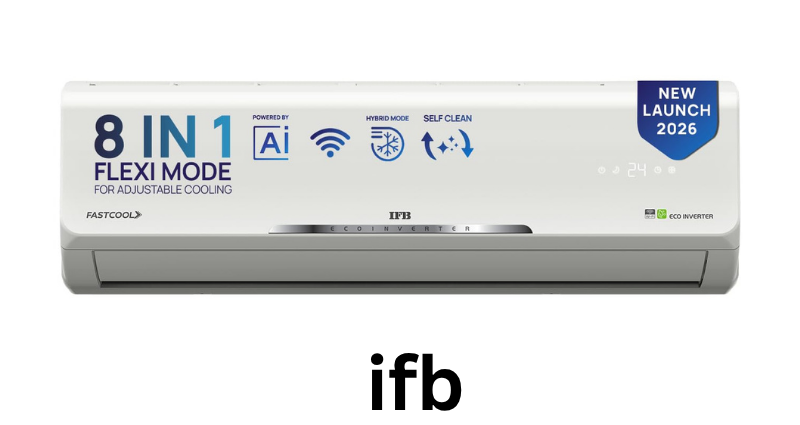
Approx. price: ₹42,490
It is a 1.5-ton inverter split AC designed for rooms up to around 150 sq. ft. The AC supports 8-in-1 Flexi modes, allowing users to adjust its cooling capacity depending on the room load and requirements.
Another major advantage is its 5.65 ISEER rating, along with support for cooling in temperatures up to 55°C. It also comes with built-in Wi-Fi, AI features and a heavy-duty compressor.
Key features
- 1.5-ton capacity
- 5 Star rating
- 5.65 ISEER
- 644.41 units annual consumption
- 8-in-1 Flexi cooling
- Built-in Wi-Fi
- AI-powered operation
- Cooling up to 55°C
- 100% copper tubes
- Self-clean technology
- 10-year compressor warranty
- 5-year PCB warranty
Pros
- Lowest listed annual energy consumption in this comparison
- Good feature-to-price ratio
- Wi-Fi and AI features
- 8-in-1 capacity adjustment
- Strong warranty coverage
Cons
- IFB does not have the same long-established AC reputation as LG or Panasonic
- Service experience can vary by location
Best for
Buy this if your biggest priority is lower electricity consumption and you want plenty of smart features without spending around ₹48,000.
Check out the best price of IFB AC here.
2. LG 1.42 Ton 5 Star AI Convertible Inverter AC
LG is one of the safest choices for buyers who prioritize brand reputation, after-sales support and proven AC technology. The LG AS-Q19YNZE2 is slightly unusual because it is listed as a 1.42-ton model, rather than exactly 1.5 ton.
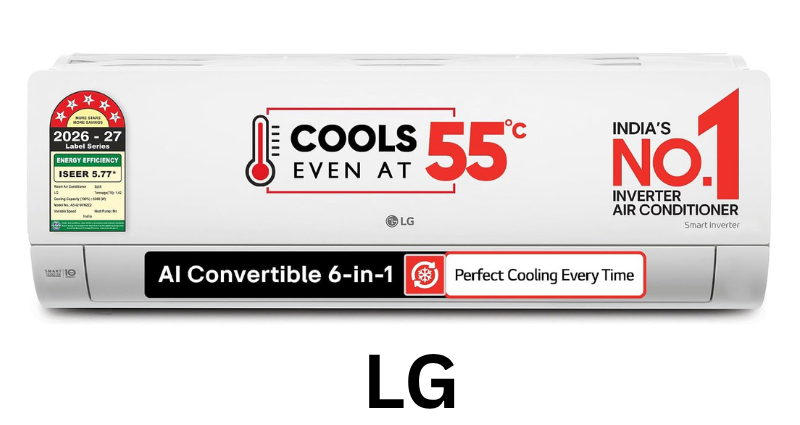
Model: AS-Q19YNZE2 | Approx. price: ₹46,990
Its listed ISEER of 5.77 is excellent and only slightly below Panasonic’s 5.80 in this comparison. Annual energy consumption is listed at 671.15 units.
The AC also offers 6-in-1 convertible cooling, four-way swing and a smart inverter compressor. It is designed to operate at ambient temperatures up to 55°C.
LG’s Ocean Black Protection and copper tubing are useful features if durability and corrosion resistance matter to you.
Key features
- 1.42-ton capacity
- 5 Star rating
- 5.77 ISEER
- 671.15 units annual consumption
- AI Convertible 6-in-1
- 4-way swing
- 55°C cooling capability
- 100% copper tubing
- Ocean Black Protection
- R32 refrigerant
- Wi-Fi/AI-related smart features depending on variant
Pros
- Excellent 5.77 ISEER
- Strong brand reputation
- Good cooling performance
- Excellent copper and anti-corrosion protection
- 10-year compressor warranty
Cons
- More expensive than Lloyd and IFB
- Slightly smaller rated capacity at 1.42 ton
- Annual consumption is higher than IFB’s listed figure
Best for
Buy this if you want an efficient AC from a well-established brand and don’t mind paying extra for LG’s ecosystem and features.
Best deal on Amazon.
3. Panasonic 1.5 Ton 5 Star Premium Wi-Fi Inverter AC
Panasonic is the premium choice in this comparison. The biggest number that stands out is its 5.80 ISEER, the highest among the five models listed here.
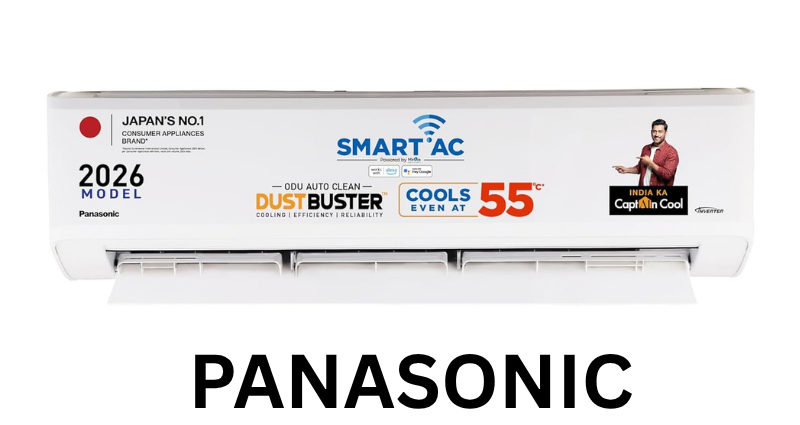
Model: CS/CU-NU18BKY5WX | Approx. price: ₹47,990
The AC has a rated annual energy consumption of 681.01 units, which is slightly higher than IFB’s 644.41 units. So although Panasonic has the highest ISEER, it isn’t the lowest on the annual consumption figure provided.
The model supports 8-in-1 convertible operation and cooling up to 55°C. It also has built-in Wi-Fi, AI features, four-way swing and Panasonic’s smart-home ecosystem.
The DustBuster feature, PM0.1 filtration and ShieldBlu+ protection add to its premium positioning.
Key features
- 1.5-ton capacity
- 5 Star rating
- 5.80 ISEER
- 681.01 units annual consumption
- 8-in-1 convertible modes
- Wi-Fi
- AI/MirAIe features
- Matter-enabled smart features
- Four-way swing
- PM0.1 filter
- 55°C operation
- Copper tubing
- 10-year compressor warranty
Pros
- Highest ISEER in this comparison
- Excellent smart-home features
- Strong feature set
- Good cooling capability
- Premium filtration
- Good long-term warranty
Cons
- Highest price among these five
- Annual consumption isn’t the lowest
- Some smart features may be unnecessary for basic AC users
Best for
Buy this if you want a premium 1.5-ton AC with excellent efficiency, smart features and strong overall specifications.
GET THE BEST DEAL NOW.
read more about Motorola Moto G77 Power (newly launch)
4. Blue Star 1.5 Ton 5 Star Smart Inverter AC
Blue Star is particularly interesting for buyers who live in areas where summers get extremely hot. This 1.5-ton model is designed to work at ambient temperatures up to around 54°C.
Model: IA518ZXUS | Approx. price: ₹47,490
It has a listed ISEER of 5.63 and annual energy consumption of 701.68 units. While that is higher than IFB, LG and Panasonic in this comparison, Blue Star offers several useful technologies for maintaining cooling efficiency under changing heat loads.
Its DigiQ Hepta Sensor system uses multiple sensors to monitor operating conditions, while AI Pro+ adjusts cooling based on conditions.
Built-in Wi-Fi and voice control are also useful if you want to control the AC remotely.
Key features
- 1.5-ton capacity
- 5 Star rating
- 5.63 ISEER
- 701.68 units annual consumption
- Wi-Fi
- AI Pro+
- DigiQ Hepta Sensors
- Four-way swing
- Turbo Cool
- Self-clean technology
- 54°C operating capability
- 10-year inverter compressor warranty
Pros
- Good hot-weather performance
- Smart Wi-Fi features
- Multiple sensors
- Four-way swing
- Strong compressor warranty
Cons
- Higher listed energy consumption than the top three
- Price is relatively high
- Not the most economical option if electricity saving is the only priority
Best for
Buy this if you live in a very hot region and want smart controls and sensor-based cooling.
For Best Deal –check out here
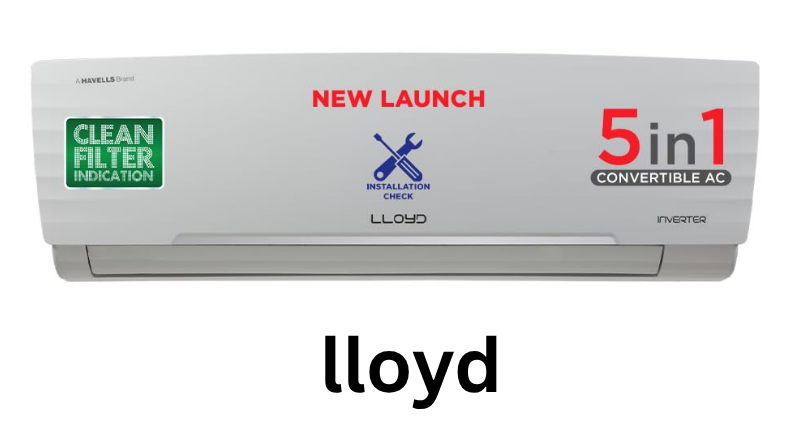
5. Lloyd 1.5 Ton 5 Star Inverter Split AC
If your budget is closer to ₹40,000, the Lloyd GLS18I5KWGGW is worth considering. At around ₹38,490, it is significantly cheaper than the other models in this comparison.
Model: GLS18I5KWGGW | Approx. price: ₹38,490
It offers 5-in-1 convertible cooling, copper components, four-way swing and operation at temperatures up to 52°C.
However, there is an important point to remember when comparing its energy efficiency. The specifications supplied for this model mention that its 5 Star rating is based on the older BEE guidelines and that under the new 2026 guidelines it would be rated one star lower.
Its listed ISEER is 5.20 and annual energy consumption is 715.07 units.
Key features
- 1.5-ton capacity
- 5-in-1 convertible cooling
- 5.20 ISEER
- 715.07 units annual consumption*
- 100% copper components
- Four-way swing
- Turbo cooling
- 52°C cooling capability
- R32 refrigerant
- 10-year compressor warranty
Pros
- Lowest purchase price in this list
- Good cooling features
- 5-in-1 convertible operation
- Copper construction
- Long compressor warranty
Cons
- Lowest ISEER among these five
- Highest listed annual consumption
- 2026 BEE rating needs particular attention
Best for
Buy this if your initial purchase budget is the biggest consideration and you don’t use the AC heavily throughout the year.
Check out the best deal here.
Which 1.5 Ton 5 Star AC Saves the Most Electricity?
If we simply compare the annual energy consumption figures you supplied, the ranking is:
1. IFB: 644.41 units/year
2. LG: 671.15 units/year
3. Panasonic: 681.01 units/year
4. Blue Star: 701.68 units/year
5. Lloyd: 715.07 units/year
So, IFB wins this particular comparison for the lowest rated annual electricity consumption.
But there is an important distinction.
Panasonic has the highest ISEER at 5.80, while LG has 5.77. ISEER is an efficiency metric, whereas annual energy consumption is a standardized estimate based on the product’s rated performance and testing assumptions.
Therefore, don’t choose an AC purely by looking at one number.
Buying Guide: How to Choose the Best 1.5 Ton AC
1. Choose the correct capacity
A 1.5-ton AC is generally suitable for medium-sized rooms, but room size isn’t the only factor.
Consider:
- Room area
- Ceiling height
- Number of occupants
- Direct sunlight
- Number of windows
- Floor of the building
- Heat generated by computers and appliances
For a typical bedroom or living room around 120–160 sq. ft., a good 1.5-ton inverter AC can be an appropriate choice.
2. Check the latest BEE energy label
This is particularly important in 2026 because BEE’s rating methodology has changed.
Don’t simply trust an old product listing that says “5 Star.” Check the energy label on the exact model you are purchasing.
Look for:
ISEER + annual electricity consumption + current star rating.
3. ISEER matters
ISEER stands for Indian Seasonal Energy Efficiency Ratio.
In simple terms, a higher ISEER generally indicates better seasonal efficiency.
In this comparison:
Panasonic 5.80 > LG 5.77 > IFB 5.65 > Blue Star 5.63 > Lloyd 5.20
But annual rated consumption should also be considered.
4. Don’t buy based on RPM alone
Inverter ACs vary compressor speed according to the cooling load. You don’t need to chase the highest RPM.
What matters more is how efficiently the system operates across different loads, reflected by metrics such as ISEER and the energy label.
5. Inverter AC is preferable for regular use
If you use your AC for several hours every day, an inverter model generally makes more sense than a conventional fixed-speed AC.
The compressor can reduce its output after the room reaches the desired temperature instead of repeatedly switching fully on and off.
6. Check warranty carefully
Don’t look only at the compressor warranty.
Check:
- Product warranty
- PCB warranty
- Compressor warranty
- What components are covered
- Whether gas charging is covered
- Installation terms
- Authorized service availability
7. Installation matters
Even an excellent 5 Star AC can perform poorly if installation is bad.
Before buying, check the installation charges and what’s included.
Copper pipe length, drain pipe, stand, extra wiring and other installation requirements can increase your final cost.
How We Selected These Products
We selected these five ACs based on the specifications and prices provided for the 2026 models.
Our comparison focused on:
- Rated annual energy consumption
- ISEER rating
- Current/relevant BEE star-rating information
- Cooling capacity
- Inverter technology
- Convertible cooling modes
- Hot-weather operating capability
- Warranty
- Smart features
- Approximate purchase price
We also considered value for money rather than simply choosing the AC with the highest number of features.
Prices can change because of sales, bank offers, exchange offers and seasonal promotions. Before purchasing, verify the latest price and current BEE energy label on the retailer’s product page.
Frequently Asked Questions
1. Which is the best 1.5 ton 5 Star AC in India in 2026?
Among the five models compared here, the IFB 1.5 Ton 5 Star AC is our pick for electricity savings because it has the lowest listed annual energy consumption of 644.41 units. Panasonic is our premium all-round alternative.
2. Which AC consumes the least electricity?
Based on the figures supplied for this comparison, IFB consumes the least at 644.41 units per year under the stated standardized conditions.
Actual household consumption will vary.
3. Is Panasonic better than LG AC?
Both are excellent options. Panasonic has the higher listed ISEER of 5.80, while LG has 5.77. LG may appeal more to buyers who prioritize brand familiarity and its established service ecosystem, while Panasonic offers an impressive smart-feature package.
4. Is 1.5 ton AC enough for a 150 sq. ft. room?
In many cases, yes. However, room orientation, sunlight, ceiling height, insulation and occupancy can change the required capacity. A heavily sun-exposed room may require more cooling capacity.
5. Is 5 Star AC really worth buying?
If you use an AC regularly for several hours a day, paying more for an efficient model can make sense because electricity savings accumulate over years. For occasional use, the cheapest 5 Star model may not always provide the fastest payback.
6. Which is better, ISEER 5.8 or lower annual units?
Both numbers are useful, but they measure different aspects of efficiency. Look at the current BEE label’s annual consumption and ISEER together, rather than using only one number.
7. Should I buy an AC with convertible cooling?
Convertible cooling can be useful because you can reduce the cooling capacity when the room doesn’t need full power. This can potentially reduce energy use and is particularly useful when the room is smaller or lightly occupied.
Conclusion: Which AC Should You Buy?
After comparing these five models, there isn’t one winner for every buyer.
🏆 Best for electricity savings: IFB 1.5 Ton 5 Star
With 644.41 units/year in the specifications supplied, IFB is the strongest choice if your primary goal is reducing electricity consumption.
⭐ Best premium choice: Panasonic 1.5 Ton 5 Star
Panasonic has the highest listed ISEER of 5.80, excellent smart features and a premium overall specification.
🛡️ Best established-brand choice: LG
LG offers a strong combination of 5.77 ISEER, good cooling performance, copper protection and a long compressor warranty.
☀️ Best for hot-weather smart cooling: Blue Star
Blue Star’s sensor technology, AI Pro+ and high-temperature operation make it an interesting option for particularly hot conditions.
💰 Best budget choice: Lloyd
At around ₹38,490, Lloyd has the lowest upfront price. However, its efficiency figures are weaker than the other models, so heavy AC users should calculate the long-term electricity cost before choosing it.
My overall recommendation: If I were choosing specifically for lower electricity consumption, I would shortlist IFB first, LG second and Panasonic third. If I wanted the best premium feature package rather than the lowest rated annual consumption, I would choose Panasonic.
Also remember that your final purchase price can be lower because of credit-card discounts and seasonal offers, while installation is generally extra. Always check the final checkout price, installation charges and the latest BEE label before ordering.
Affiliate Disclosure: This article contains affiliate links. If you purchase a product through these links, I may earn a small commission at no additional cost to you. This helps support the website and allows me to continue creating product comparisons and buying guides.